


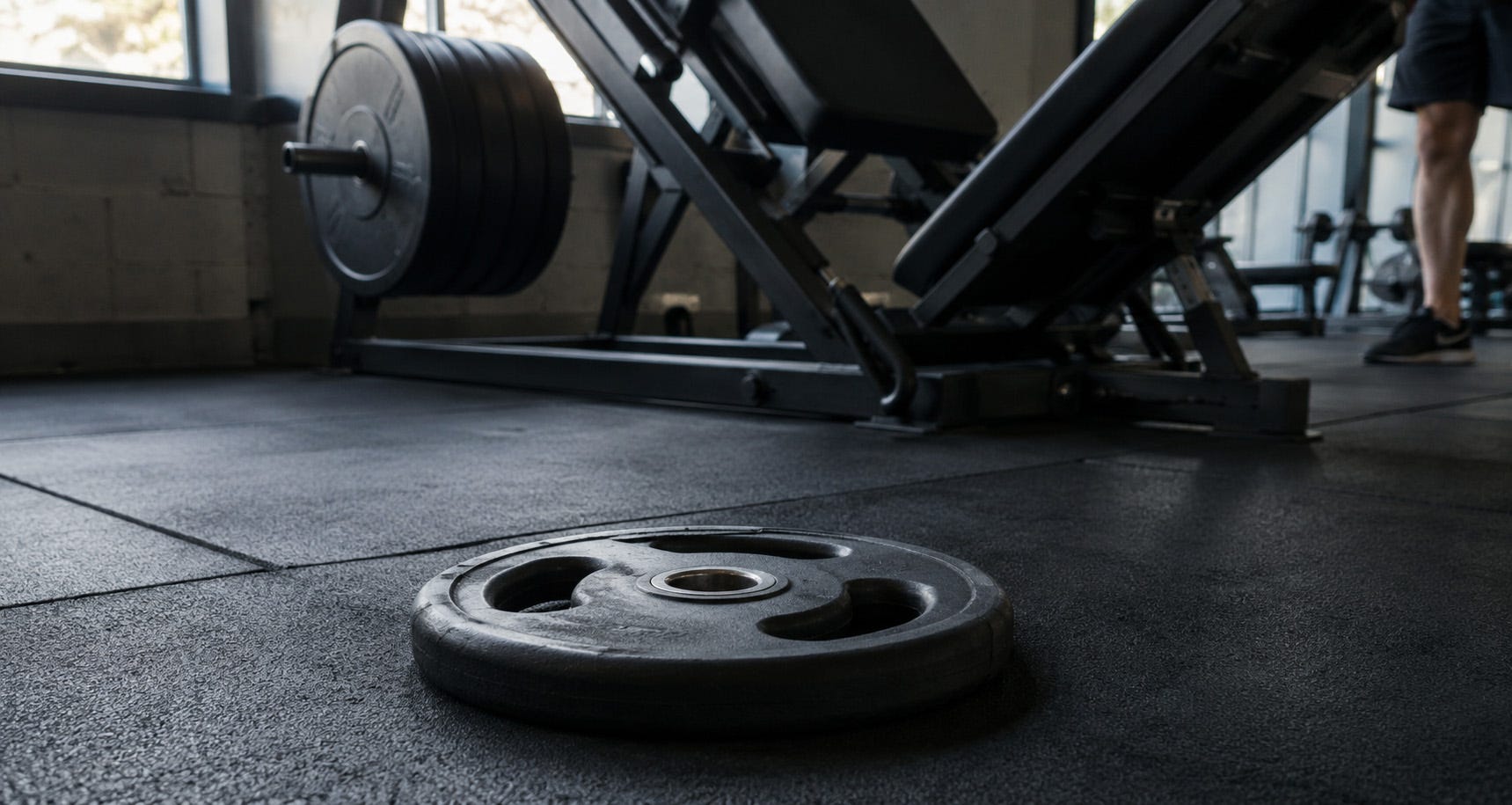
Monday morning, leg press. Last workout I had 380 pounds on the rack, which is where I keep it these days. A few years back I’d have looked at that number and wanted to drop the pin another notch to 400 before I started my first working set. More was the entire point of being at the gym.
That wiring is still in me. I felt it Monday, the old itch to load it heavy and find out what was left in the tank.
I left it at 380 and did my reps.
In one month I turn 65. I’ve spent most of my life reaching for the next plate in one form or another. I left the Navy at 28 with no degree and no GI bill and started from the bottom with nothing, and every few years there was a new bottom to start from. The reflex served me. You don’t claw your way up by teaching yourself code at a folding table in a warehouse because you’re satisfied with where you are. Satisfaction was the enemy. There was always a heavier load, a bigger number, a next thing.
That reflex builds a man’s first half. It can hurt him in his second.
What the engine cost to build
I was born with a clubfoot. The corrective surgery set off a chain that gave me scoliosis, and somewhere along the way my lung capacity settled at 66 percent of what it should be for a man my size. Thirteen surgeries from childhood until now.
I still got lean and strong in my 60s. Not heroically. Three days a week. Forty to sixty minutes. Showing up and logging it until the body I’d been handed became one I’d built.
That’s the engine. 15 years of consistency turned my wheezy, crooked chassis into something that runs hard.
Here’s the part I had to learn over time: when you boost your car from 350 horsepower to 600, you don’t sit in the garage telling yourself you need 800. You built the 600. You drive it. You keep the oil clean and the belts tight and you enjoy the machine you spent two decades building. The man who keeps revving it past the redline hunting for more is the man who ends up with a blown engine.
At 65, another plate on the machine buys me nothing but better odds of tearing something that won’t heal on the “young” schedule.
I already know how this movie ends
I know the cost of the “more” reflex because money taught me before the gym did.
I rode a bunch of crypto positions all the way up, watched them turn into serious money, and didn’t take much off the table. I needed it to be bigger. So I held most of it all the way back down to where I started, and then I sat there holding nothing, having flunked the same test a dot-com crash had given me 20 years earlier. Twice now I’ve handed back the thing I built because 600 wasn’t enough and I reached for 800.
Your body runs the same math, and your body doesn’t issue refunds. Push past your stage on a heavy day and the bill comes due in a torn shoulder, and a torn shoulder at 65 isn’t a six-week problem. The account I’m guarding now took longer to build than I’ve got left to rebuild it.
I’d like to tell you the itch is gone, but it isn’t. When I was younger, training was about vanity, looking good, getting noticed. That’s quieter now. I still want to be strong, but now the point is different: to be the kind of man my wife can lean on and other men can learn from.
Vanity still tugs at my sleeve; it just doesn’t run the show anymore.
Enough is a discipline
Paul wrote something to Timothy that took me until my 60s to understand:
But godliness with contentment is great gain, for we brought nothing into the world, and we cannot take anything out of the world.
1 Timothy 6:6-7
He wrote it to people who’d turned their faith into one more way to get more. The contentment he’s pointing at is a hard skill: knowing when you have enough and guarding it instead of gambling it. My body is a good thing. Strength is a good thing. They go wrong the moment they become the thing I’d wreck myself to increase.
So here’s where it lands for you: somewhere you’re carrying a number you set when you were a different man. A weight on the bar, a waist size, a paycheck, some figure from 20 years ago you still measure yourself against today and come up short. That shortfall may not be failure. It may be a measurement error. You’re holding the engine you have now against the redline of the engine you used to be.
I’m not telling you to give up and just let yourself go. Keep showing up. Three days a week, or whatever yours is. Keep the discipline, because maintenance is still work and a 600-horsepower machine left to sit in the driveway rots like anything else. The job in the second half turns from building to keeping, and keeping is not the lesser verb. Ask any man who let it all go what he’d give to have something worth maintaining again.
I built and sold two companies by always reaching for the next thing. That reflex made my career, and it nearly emptied my bank accounts twice. The gym is where I finally learned the difference between building something and feeding something that can never be full.
You built the 600. Quit trying to wreck it for 800.
The body part of this is a book I just finished, and it’s all about the keeping. The Last 10 Pounds is how I stayed lean through 13 surgeries, a wrecked knee, four moves, and a divorce, on 66 percent lung capacity and 34,000 logged meals. The Kindle edition is on pre-order for $9.99 and ships June 30. If you don’t want to wait, the PDF is $9.99 and downloads now. The first chapter’s free on my website:

Vic built and sold ScreenRant.com and GameRant.com, then rebuilt himself in his sixties. He writes at TheRedeemedSecondHalf.com about faith, identity, and the second act.
Growing... wiser is understanding the true meaning of this: "More was the entire point of being at the gym."
Excellent article