


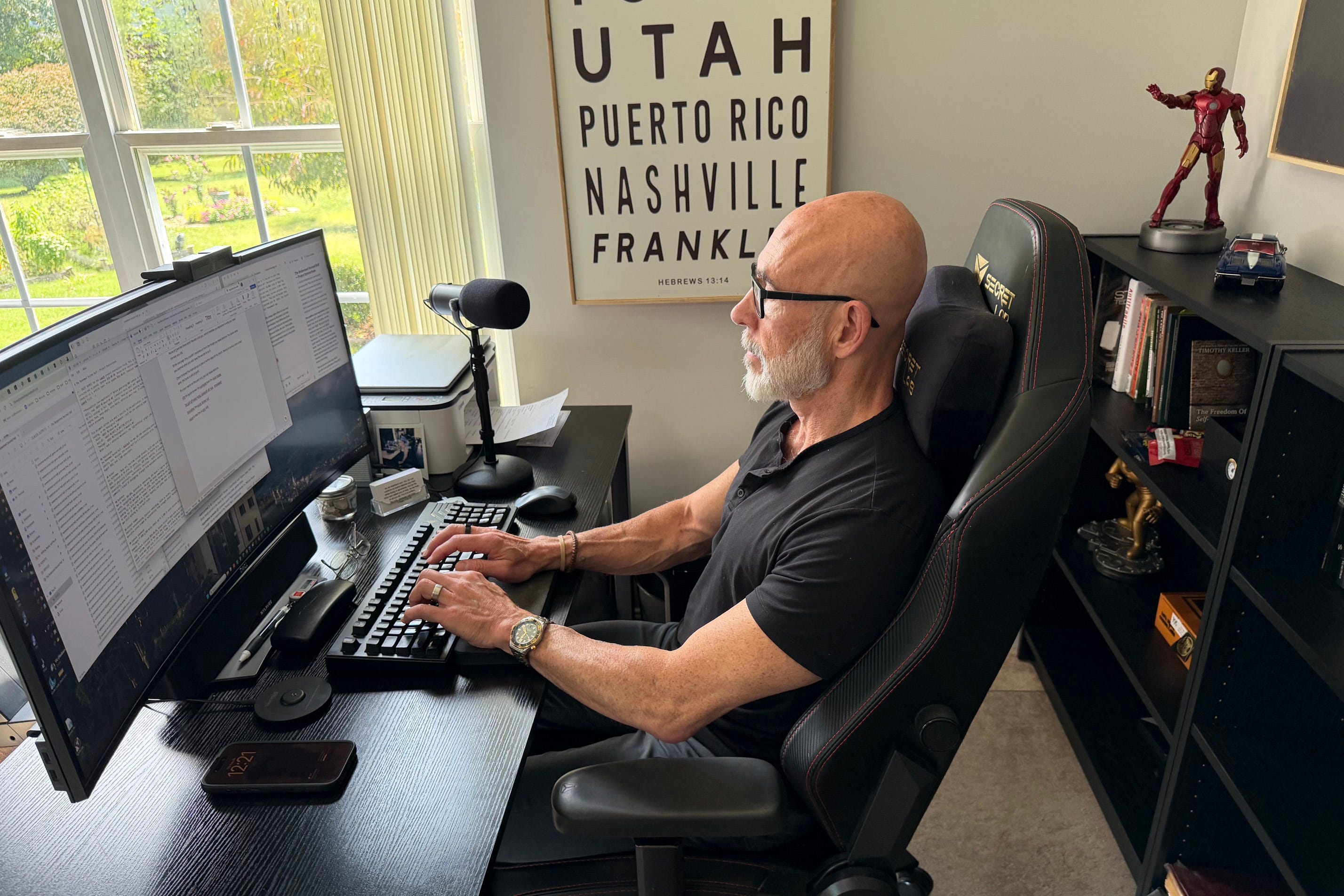
At 65, my name is on every word I publish. For sixteen years I did the opposite.
I built Screen Rant and Game Rant to run without me. That was the whole design. The sites had my fingerprints all over them, but I wanted standalone businesses, not extensions of my personality. I didn’t want to be the brand.
My business mentor at the time seriously disagreed. I said to him: “How many people know the name of the CEO of General Electric?” Very few, and meanwhile he’s earning a ton every year. I wanted money, not fame. Even in the early days, I had an exit in mind.
Writers produced the articles, editors ran the day-to-day, and I watched the traffic, looked for trends, tracked revenue and expenses. The product had to work without a reader ever knowing who owned it.
It worked. When I sold, the buyer took over the movie site on day one. No transition period, because the operation didn’t need me in it. I called that proof I’d built the asset right. I still do.
What I gave away
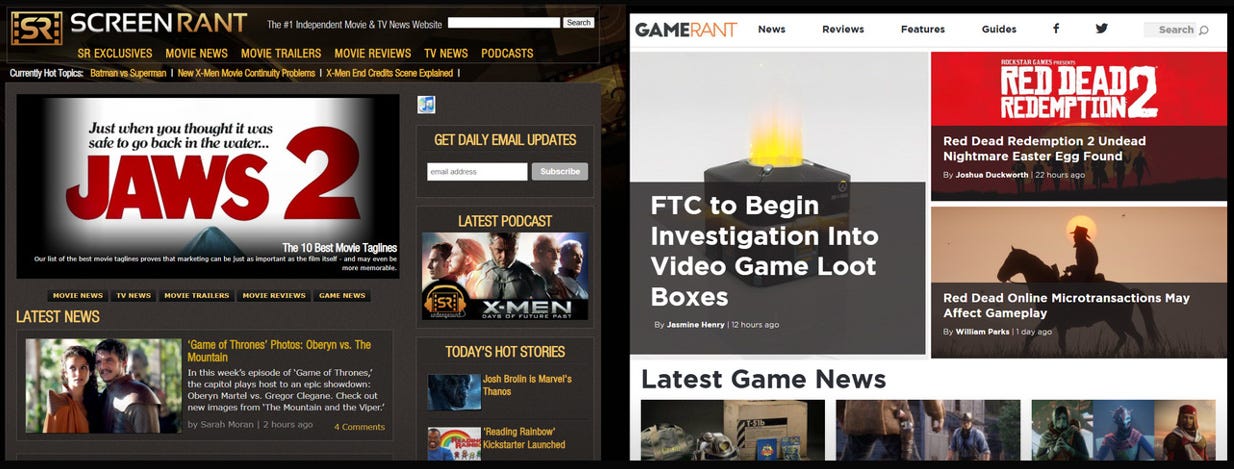
The part I missed showed up after the sale. The movie site had roughly 12 million unique readers a month near the end of my ownership, and I kept none of them. No email list. Nothing. Their relationship was with the site, not with me. Twelve million people I left behind. In retrospect that was a massive, MASSIVE lost opportunity.
After my gaming site sold, I tried to build an automotive site. I put a few months in, watched how much the internet had changed in favor of huge corporate sites over small independent ones, and killed it. That failure got under my skin more than it should have. I’d built two successful sites, and part of me needed to know I could do it a third time. Maybe I wasn’t a one-trick pony. Maybe just a two-trick pony.
The businesses were gone, the audiences were gone, and I was still trying to measure myself by whether I could build another one.
My money went the same way. My divorce cut my net worth in half. I own my part in that. My anger did damage, and I didn’t lead my household with the strength I should have. Then crypto brought me back to where I’d been, I got greedy, and I held on all the way back down to where I started.
I wasn’t ruined, and I wasn’t dying. I’d learned I could lose everything I built and still be standing there the next morning, but no longer sure who I was without it.
The book he had refused to write
Ulysses S. Grant lived a harder version of that.
By the summer of 1885 he’d commanded every Union army, taken Lee’s surrender at Appomattox, and served two terms as president. He was also broke and dying of throat cancer. A young Wall Street operator named Ferdinand Ward had run the investment firm Grant joined as a Ponzi scheme, and when it collapsed in 1884 Grant’s fortune went with it. The sore throat he’d been ignoring turned out to be inoperable.
Friends had spent years telling him to write his memoir. He kept refusing. Other men had already written about the war, and he didn’t think of himself as a writer. Financial ruin ended the argument. He wouldn’t live long enough to rebuild, and he needed to leave his wife something to live on.
So he wrote, five to seven hours a day. When speaking became difficult he dictated what he could and wrote the rest in pencil, his son and a few assistants checking facts as the cancer got worse. Mark Twain caught him about to sign a weak publishing deal and replaced it with a better one.
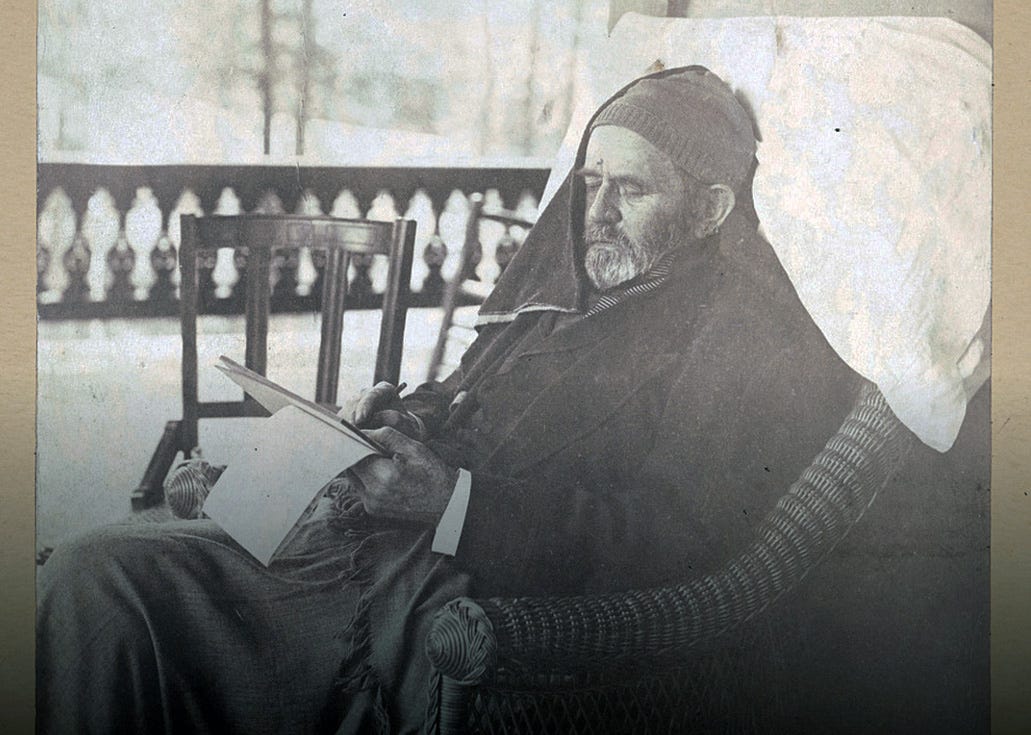
Grant finished the manuscript within days of his death in July 1885. The two volumes sold hundreds of thousands of sets and gave his family the security he’d been trying to provide. The book is still in print, almost a century and a half later.
The one thing Grant had left worth anything was the story he’d spent years refusing to tell.
The work with my name on it
At 65, I’m doing the opposite of what made those websites worth buying.
The Redeemed Second Half has my name on every article. Its value comes from the parts of my life I’d have skipped if I could: the divorce, the anger, the physical limits, the money mistakes, the years I spent confusing success with purpose. Another writer can cover a movie. Another editor can run a website. Nobody else can testify to my life.
Grant’s memoir mattered because he’d been there. He remembered the men who didn’t come home and what the decisions had cost. Only he could give that account.
You have one of those too.
Do not store up for yourselves treasures on earth, where moths and vermin destroy, and where thieves break in and steal.
(Matthew 6:19)
Everything I built to be inherited got moths, rust, and a buyer. The audiences, the money, the sites, all of it was the kind of thing that changes hands. What I learned in the losing of it doesn’t transfer that way. Only I can pass it on.
Here’s what took me too long to see: the account of your life experiences is the one thing you own that can’t be taken from you. A buyer can’t acquire it. A market can’t zero it out. A divorce can’t cut it in half. Nobody lays you off from it, and an industry can’t make it obsolete. Every other thing I owned did one of those to me. This is the only asset I’ve built that’s worth more to me every year instead of less.
And you don’t have to die for it to pay off. When the company sells and the title’s gone and you’re standing there the next morning not sure who you are, this is the part that remains. It’s how I found my way back to myself.
You may never write a memoir. You already own that asset, right now, whether you’ve looked at it or not.
Your family can inherit the house. They can divide the money and decide what to keep. None of it will tell them what the win cost you, which mistake you kept repeating, or why you lived the way you did.
Tell them.
Tell your children something about your life they’d never know from the things you leave behind. Tell them what you got wrong. What it cost you. What took you forty years to understand.
Write it down, if that’s how you do it. Grant did, in pencil, days from dying.
Just don’t take the one asset only you can give them with you.
Click below to subscribe:
Vic built and sold ScreenRant.com and GameRant.com, then rebuilt himself in his sixties.
He writes at TheRedeemedSecondHalf.com for men rebuilding the second half of life.
The missed email list point hit hard. Twelve million readers and nothing to show for it after the sale. That's the kind of mistake that keeps you up at night.
The Grant parallel works. He didn't think of himself as a writer either, but the memoir mattered because he'd actually been there. Nobody else could tell that story. The websites were built to be transferable, and they were which meant they transferred away from him too.
Great article. Write it down. Make it real, tangible, meaningful before it's to late. This is what men have done since Marcus Aurelius, the lives of the saints, Ulysses, others, it's what men still do today, and will do tomorrow. Be a man, put pen to paper.