


Within hours of being told that my home page was depressing, I had retitled several articles, replaced two header images, and changed how I would structure future articles.
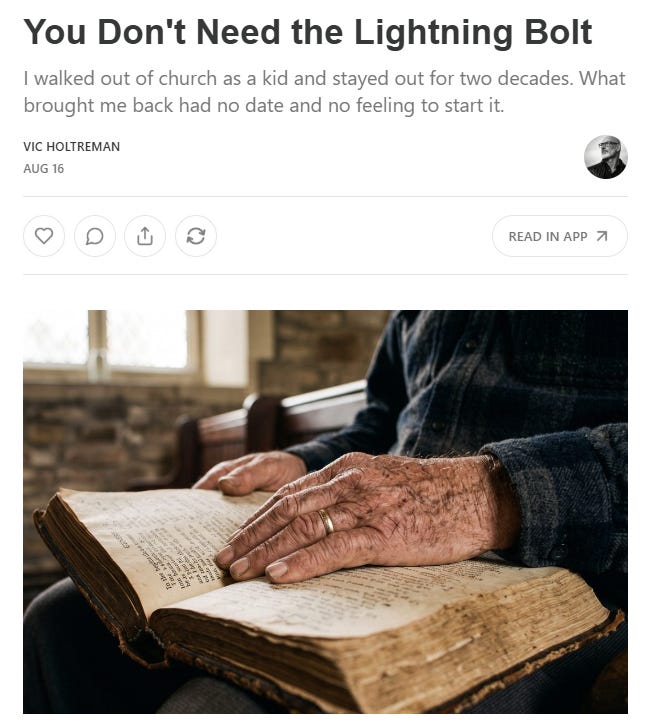
Here is one of the changes that I made (these are both the same article):
Before:
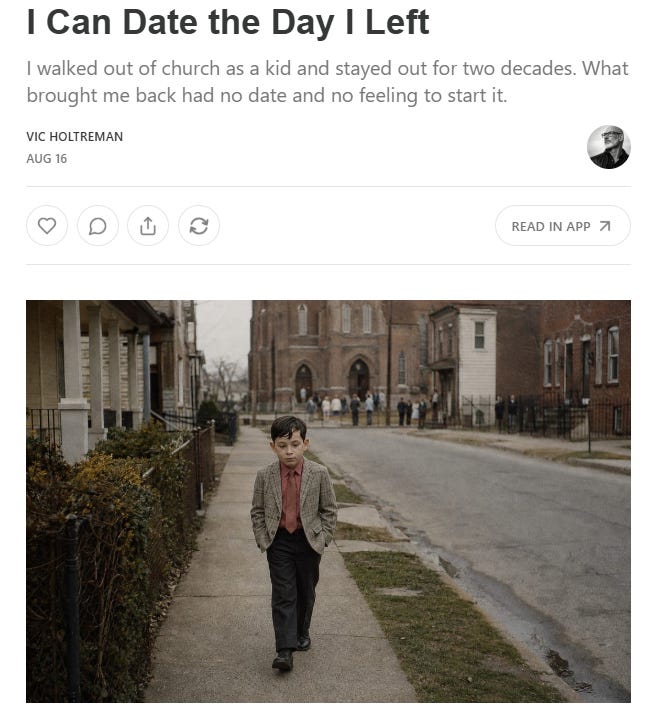
After:
I’d recently had a call with someone who’s mentoring me in my writing and online presence. He had reviewed the home page of The Redeemed Second Half, and he said that the vibe was depressing and gloomy, which didn’t match my personality or my brand.
The Redeemed Second Half promises redemption. The titles and images showed a new reader what he might be suffering from. He’d see the dark starting point, not the rebuilt side, which only appeared after he opened the essay and kept reading.
I could have answered: “Well, I’ve gotten pretty good engagement on these articles.” I took a step back and decided that he was right. The article titles and images needed to point to the solution. I write to point men toward wisdom and redemption, and to hand them the practical steps that make them better husbands, fathers, and men.
I immediately retitled some of the posts and changed a couple of header images, and I had to admit that the overall impact of the page was now much improved.
The other correction
I was dating someone, and for two years, close friends had been telling me it was a bad deal and that I should end it. It wasn’t good for me, and I should get out of it. I argued with them at every turn, gave them my counterarguments, rationalized, and refused to listen.
“When it’s good, it’s great.”
“I feel a sense of responsibility.”
By the end, we’d broken up and gotten back together many times, and the highs weren’t very high and the lows were very, very low. Anxiety and anger on both sides.
It went on for over two years until I finally ended it for good. I held some of the responsibility for the drama. She assumed we were exclusive. I let her assume that even when it wasn’t my intention and my behavior didn’t reflect it.
I’d paid my mentor to find what I couldn’t see. I’d already granted him permission to tell me where I was wrong. He’d made millions online and I knew I could learn from him. It had been many years since I’d written regularly for Screen Rant, and my writing and social media skills were extremely rusty.
My friends were my friends, and I’d never given them that permission. I put their authority on trial because I didn’t agree with some of their views, and I stayed.
My own pattern
I’m writing about this because at church last Sunday, the pastor was discussing Ecclesiastes. He referenced Proverbs and talked about the three types of behavior:
Wisdom
Foolishness
Evil
It struck me because I’ve had all three responses at different points in my life.
My pastor said that those three categories don’t necessarily define a person. But what can put them in one category over another is the pattern of their behavior. We tend to look at others to determine where they land, but he asked us to look at ourselves instead. Over time, repeatedly, how do I react to correction?
Wisdom receives correction. A wise person remains open to what another person sees, even when hearing it is uncomfortable. That’s how I responded to my mentor.
Foolishness doesn’t want to hear correction. During that relationship, my friends could have gone blue in the face trying to convince me that I was wrong. Nothing they said could move me from the position I’d chosen to defend.
Then there’s evil, and while I do believe that there are evil people, I know that all of us have chosen an evil response in a given moment or thought evil thoughts at one time or another.
Evil retaliates against the person bringing the correction. Online, a comment we believe is vile or egregiously wrong can lead us to dark thoughts or a reply intended to hurt that person.
Proverbs 9:7–9 describes this well:
Whoever corrects a scoffer gets himself abuse,
and he who reproves a wicked man incurs injury.
Do not reprove a scoffer, or he will hate you;
reprove a wise man, and he will love you.
Give instruction to a wise man, and he will be still wiser;
teach a righteous man, and he will increase in learning.
Before you reply
I’ve found this passage helpful when scrolling X or Facebook. If I see a comment that makes me feel like I want to correct the person, I click over to their profile first. Based on what I see, I decide whether it is worth engaging with them, or if I should just shake my head and move on.
I’m pretty sure most of us don’t run into the sort of conflicts on a daily basis that we see online, but the same rule applies. It can be obvious from one or two brief (potentially heated) exchanges whether you’re dealing with a scoffer or a wise man in that moment.
We can forgive people who we see as evil, but forgiveness doesn’t require giving them unlimited access to our lives. You can forgive someone and pray for them while taking steps to protect yourself. Setting boundaries is not abandonment.
Where I land now
I still falter more often than I’d like to admit, but I catch myself sooner now. As I get older, I like to think I spend much more time in the “wisdom” column than in the other two. That recent correction changed my home page within hours. The previous one took more than two years and repeated warnings from people who cared about me.
I own both responses.
The older I get, the more I realize how little time I have left. Ecclesiastes reminds us repeatedly that our lives are brief. I didn’t waste those two years — I learned about self-respect and the importance of being an honorable man. That’s made me a better husband to my wife.
These days, I realize I may not always be right. My initial reaction might be foolish or defensive, but then I think: “Does he have a valid point? Why am I being defensive?”
It is better for a man to hear the rebuke of the wise than to hear the song of fools.
Ecclesiastes 7:5
The next time a friend gives you hard-to-hear feedback about your behavior or choices, be wise. Don’t play the fool.
I just spent a thousand words on who gets permission to tell me I’m wrong. If I missed something here, tell me in the comments. I read them and I reply.
I write The Redeemed Second Half every Sunday morning for men rebuilding in the second half. Subscribing is free.
Vic built and sold ScreenRant.com and GameRant.com, then rebuilt himself in his sixties.
He writes at TheRedeemedSecondHalf.com for men rebuilding the second half of life.
Age doesn't equal wisdom. When someone tells you you may be wrong, that's where wisdom comes into play.
The more time you spend being right, the easier it is to defend why you're right. You've had years of experience on your side. Probably some failed attempts at going against your instincts as well. Experience can be your wisdom, or it can become your blind spot.
Good point about letting others correct you. Some people you shouldn't allow to correct you. Some will try to help you because they love you. Others will just love to correct others. Be mature enough to know the difference. But don't use your maturity as a crutch.
When I find myself defending my position, I usually look at why I'm doing so. Maybe they are wrong, but more likely I just don't want to look at something. I ask myself why am I resisting this? Is it false, or will I have to change if I let it be true?
It may take hours or years to make that change. But I've always found that I'll receive a higher cost for not listening.
It's less expensive to be wise.
Great read Vic. I think friends that give honest feedback are extremely rare. That’s a valuable person. I like to think I can offer wisdom and advice at this point in life but your filter is right. Make sure they are worthy first.